
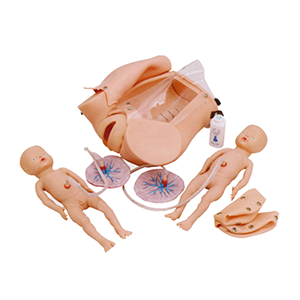
The "Series of Models for Teaching the Mechanism of Childbirth" is mainly used by teaching staff to systematically present the key anatomical structures and dynamic changes throughout the entire process of childbirth to students, intern medical staff, midwives, and novice obstetricians.
Models usually include the maternal pelvis, fetal models, and mechanical structures that can simulate actions such as fetal exposure, fetal position, fetal head descent, rotation, flexion and extension, which can truly reproduce the physiological process of the fetus passing through the birth canal under the propulsion of uterine contractions.
Through intuitive visual demonstrations, learners can clearly understand the mechanism changes from the first stage of labor to the third stage, and master the influence of different fetal positions on the labor process. Teachers can use the model to explain the causes of difficult labor, identify abnormal fetal positions, and situations where the fetal head does not enter the pelvis, and demonstrate in combination with clinical thinking.
The model is easy to operate and has a durable structure. It is a commonly used demonstration tool in teaching hospitals, nursing colleges and midwifery training bases, which helps to enhance learners' spatial understanding of the delivery mechanism and midwifery thinking.