
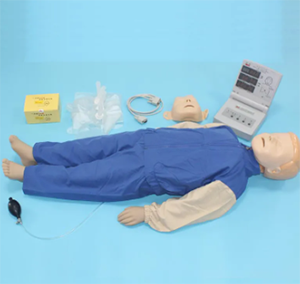
The standards for the successful operation of the advanced pediatric cardiopulmonary resuscitation (CPR) manikin are mainly formulated based on the clinical CPR process and quality control requirements, aiming to help trainees master standardized first aid skills.
First of all, trainees need to quickly assess the consciousness and breathing of the "child patient" before the operation and call for help in a timely manner to ensure the continuity of the first aid process. Secondly, external chest compression must meet the correct standards: the compression site should be located below the line connecting the two nipples, with a depth of approximately one-third of the anteroposterior diameter of the chest cavity, and the frequency should be maintained at 100 to 120 times per minute. During the compression process, ensure that the chest cavity fully rebounds, and the force and rhythm should be uniform. In terms of artificial respiration, mouth-to-mouth or breathing balloon methods should be adopted. The volume of air blown should be moderate, allowing the chest to rise and fall clearly, and hyperventilation should be avoided.
Throughout the operation, it is necessary to ensure that the ratio of compression to ventilation complies with the norms of pediatric cardiopulmonary resuscitation (usually 30:2 or 15:2 when two people cooperate). In addition, operators should pay attention to the prompts of the simulation maniac feedback system, such as whether the light or sound feedback indicates that the pressing depth and frequency meet the standards. After the operation is completed, it should be able to continue for several cycles and correctly connect the use of the AED with the subsequent first aid procedures in the simulated scenario. If the trainees meet the requirements in terms of standardization, continuity and effectiveness, the operation can be judged as successful.