
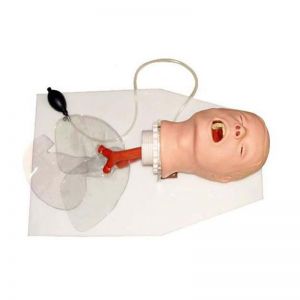
The classic tracheal intubation training model is a commonly used medical teaching and skills training tool, mainly used to help medical students, nurses and clinicians master the standardized operation of tracheal intubation. This model is based on simulated anatomical structures and is usually made of soft simulation materials. It can truly reproduce anatomical parts such as the oral cavity, throat, trachea and glottis. During the operation, trainees can clearly identify airway landmark points, thereby effectively improving the accuracy and proficiency of the operation.
Product features and functions
1: A specially designed head model for practicing tracheal intubation;
2: The anatomical structures inside the oral cavity, such as teeth, tongue, uvula, glottis, epiglottis, larynx, arytenoid cartilage, vocal cords, etc., are very lifelike.
3: Oral and nasal tracheal intubation practice can be performed.
4: It can simulate the practice of clearing foreign objects or secretions from the respiratory tract.
5: Tilting the head back is the correct position for intubation.
6: With an attractive transparent base;
7: Palpable simulated carotid artery pulsation;
8: By applying pressure to the cricoid cartilage, changing the position of the airway, and closing the esophagus, practice the operation of the Sellick technique.
During the usage process, trainees can repeatedly practice through the model, including the correct use of the laryngoscope, the insertion and fixation of the tracheal tube, the inflation of the airbag and the evaluation of the ventilation effect, etc. Meanwhile, this model is usually equipped with a glottic observation window or a ventilation detection system. When intubation is successful, it can simulate respiratory airflow, thereby providing learners with intuitive feedback. This design not only enhances the authenticity of the training but also helps trainees promptly identify and correct incorrect operations.
The clinical significance of the classic tracheal intubation training model is very prominent. It avoids the risks brought by repeated attempts directly on patients and provides medical staff with a safe and controllable learning environment. Through long-term and repeated training, trainees can master the core points of tracheal intubation and perform operations quickly and accurately in clinical situations such as emergency rescue, anesthesia and intensive care, significantly improving the success rate of rescue and patient safety. Therefore, this model is not only an important tool for medical education, but also a significant guarantee for medical quality and safety.