
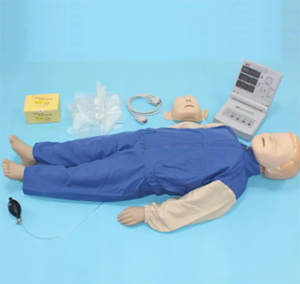
The children's cardiopulmonary resuscitation simulation manikin is mainly used to enhance the emergency response capabilities of medical staff, emergency personnel and related trainees when children suddenly experience cardiac and respiratory arrest. The model is made based on the anatomical and physiological characteristics of children, which can truly present the elasticity of the thorax, the structure of the respiratory tract and the feedback of compression depth, making the training more in line with clinical needs.
In operational training, the simulation manikins are suitable for learning the complete process of pediatric cardiopulmonary resuscitation, including key steps such as consciousness judgment, breathing and circulation assessment, external chest compression, artificial respiration, airway management, AED use, and post-resuscitation treatment. Its feedback system can display the pressing force, frequency, rebound and ventilation volume in real time, which helps trainees correct their movements in time and form standardized operation habits.
In terms of teaching scenarios, the model is widely used in hospital skills training, medical school classrooms, nursing training centers, first aid stations, public first aid classes and emergency drills. Through scenario simulations, such as airway foreign body obstruction, drowning, and cardiac arrest caused by trauma, it helps trainees exercise their clinical thinking and emergency response skills.
Overall, the children's cardiopulmonary resuscitation simulation manikin provides a safe, controllable and repeatable training environment, and is an important teaching equipment for enhancing children's first aid capabilities and improving the success rate of treatment.