
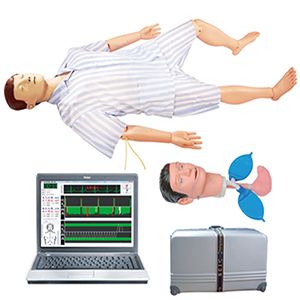
The comprehensive first aid nursing training simulation manikin is a highly realistic teaching device integrating assessment, operation and feedback. It is widely used in school teaching, hospital training and first aid skills competitions. Its core function is first reflected in the "multi-scenario comprehensive training". The dummy can present vital signs such as breathing, heart rate, pupil changes, and blood pressure fluctuations. Trainees can carry out multiple first aid skills training such as initial assessment, cardiopulmonary resuscitation, airway management, hemostasis and bandaging, and transportation and fixation in a nearly real situation, making the learning process more coherent and systematic.
Secondly, it can provide "immediate and quantified operational feedback". The system can record information such as the depth of compression, frequency, ventilation volume, and AED operation norms, and provide immediate prompts, helping trainees quickly identify problems, adjust their movements, and improve the accuracy and standardization of their practice.
Third, the comprehensive emergency care simulation manikin supports team collaboration and process-oriented drills. Trainees can carry out division of labor and cooperation in a unified situation, such as establishing airways, monitoring vital signs, and implementing drug treatment, which is conducive to enhancing the team's response ability and on-site communication efficiency.
Finally, such simulation manikins can also reduce the risks in real teaching, providing a repeatable, safe and cost-controllable training environment to ensure that trainees master key first aid skills without causing any harm. Overall, it holds significant value in enhancing the quality of emergency care, cultivating professional skills, and strengthening clinical emergency response capabilities.